Crick: A Mind in Motion
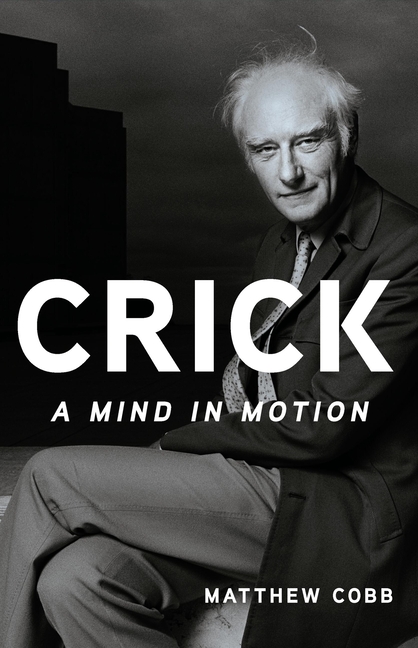
Cobb aims for the tricky 'middle path': a life vivid enough to engage readers who haven’t thought about the double helix since high school, and detailed enough to satisfy the scientists ... Crick’s life lends itself to storytelling ... Cobb carefully addresses the controversy surrounding Watson and Crick’s use of the British molecular chemist Rosalind Franklin’s work, but fails to look more broadly at the way women scientists have been excluded from the kind of intimate, generative male collaboration that fueled Crick’s brilliance ... As a full-throated admirer of Crick’s 'galaxy brain,' he tends to gloss over the hard bits having to do with his subject’s less admirable moments ... Cobb acknowledges that a 'Crick halo' sometimes raised the Nobelist’s ideas above criticism — but he leaves it in place. A candid consideration of the contrast between Crick’s shining mind and his occasionally tarnished views would further complicate and enrich this intriguing portrait of a gifted, self-absorbed, exuberant and intuitive man.
Read Full Review >>
Mr. Cobb, a professor emeritus of zoology at the University of Manchester and the author of The Idea of the Brain (2020), an excellent cultural history of ideas about how our minds work, is especially persuasive on Crick’s hitherto underacknowledged influence ... In a 1979 survey for Scientific American, Crick discussed new methods in neuroscience, including mapping areas of the brain and using computers to model neural networks of the kind that now power AI systems. 'The ideas and insights he outlined still dominate the field,' observes Mr. Cobb, 'even though most neuroscientists have no idea that Crick was the first to coherently articulate them' ... Crick was living a colorful personal life. He and his wife, Odile, smoked marijuana, listened to Jimi Hendrix and hosted glamorous and risqué parties at their London house. She was also tolerant of his fondness for 'pretty girls,' with whom he could have 'adventures.' Unfashionably for a modern biographer, Mr. Cobb makes only very brief and glancing reference to these peccadilloes. This is perhaps fair reciprocation for the fact that, soon after a conference in which he suggested putting a chemical in food to render people sterile (then giving the antidote only to those considered to be worthy breeders), Crick decided to cease making public statements about political questions. 'As you know,' he wrote to one correspondent, 'I’ve tried to take an interest in problems concerning science and society but I’ve reluctantly come to the conclusion that I have little talent for them and no taste at all.' If only more famous scientists were as self-aware.
Sheds fresh light on the rivalry surrounding the discovery of DNA but also fleshes out Crick’s other contributions ... Yields some new information while challenging current perceptions ... Many biographies use a singular life as a kaleidoscope to refract a historical period and view its patterns ... Cobb’s biography does something different. His Crick was both the consummate insider and a scientific outlier.
Read Full Review >>