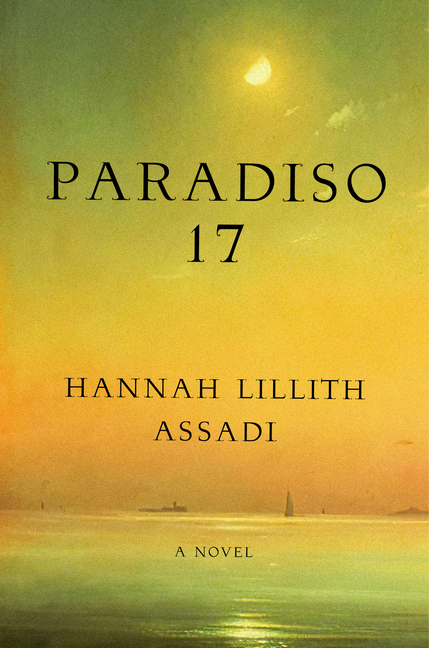
Paradiso 17
There is a strain of the exile novel that mistakes vacancy for depth, drift for destiny. Hannah Lillith Assadi understands that temptation and resists it. Paradiso 17, her third work of fiction, is quiet and alert; it is a study in inheritance, in the afterlife of ideology, in the way history seeps into every curated idyll. The novel deepens its primary note, the toll of human displacement, until it has an operatic resonance ... The title’s invocation of Dante promises ascent and descent, but the novel offers something closer to suspension, mostly of judgment ... Assadi’s prose is controlled, tensile and patient. She has an ear for the humiliations that create intimacy between strangers ... There are moments when Assadi’s lyricism skews sentimental or clichéd ... Still, it is refreshing to read a novel, in this era of distant cool, that risks sentimentality. Assadi, born in 1986 to a Jewish mother and a Palestinian father, is reckoning with the problem of her generation: how to feel when you’ve been trained primarily to observe, how to render the absurdity of devastation without irony. Paradiso 17 is suffused with tenderness ... Assadi refuses easy answers. If there is irony here, it is muted, almost mournful. The author is after something slower: the way history settles into you, day by day. Modernity is both an escape from history and a stage on which its contradictions become unbearable.
Read Full Review >>
Wistful ... Exquisitely atmospheric and tender ... A distinctive immigrant’s tale ... As a corrective to the fiction of moral convenience, read Assadi’s wistful and elegiac novel, brimming with contradictions and heartache yet rife with the unquenchable desire to find oneself safely at home.
Read Full Review >>
This is a novel about exile – that ghostly state full of contradictions. Exile is easy to romanticise: it can be beautiful, intellectually productive, even liberating ... Assadi’s writing is excellent – the kind that is often described as 'lyrical' or 'haunting'. It asks for some work on the part the reader but never too much and, though it is not heavily plot-driven, we never get bogged down in turgid prose that goes nowhere ... If this all sounds like a depressing book, well, it is. But not relentlessly. Paradiso 17 isn’t funny but there are moments of levity and of beauty. There is hope and connection through the generations. There is even, occasionally, love. Yet all of these things are experienced through the fog of exile, leaving them changed and oddly unidentifiable.
Read Full Review >>